

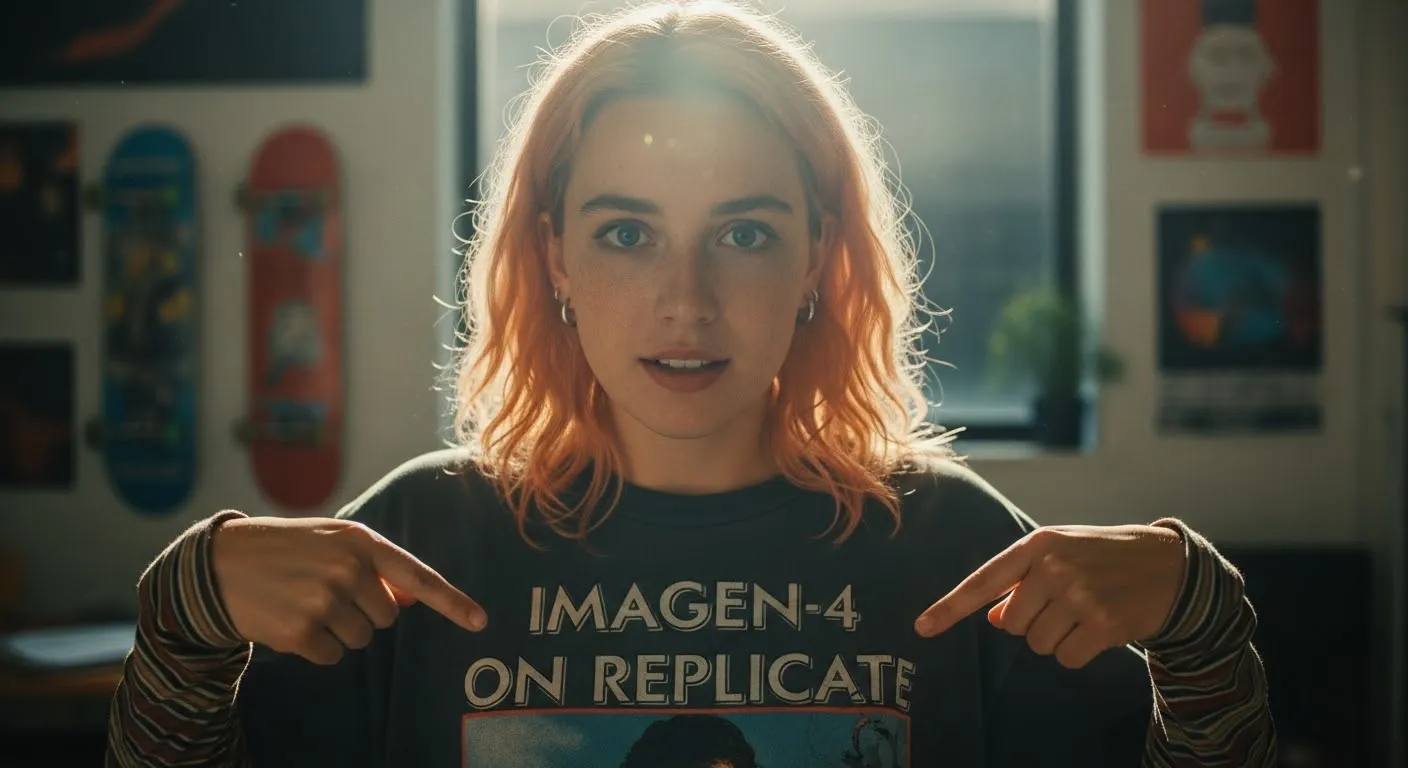
Imagen 4 guide: architecture, 3-tier pricing ($0.02–$0.06), strengths, limits, and proven prompt patterns for Google DeepMind's best text-to-image model.
Imagen 4 is Google DeepMind's most capable text-to-image model to date, combining photorealistic output quality with native text rendering and transparent-background support. Released at Google I/O on 20 May 2025 and made generally available on 15 August 2025 [1][7], it ships as a three-tier family spanning rapid ideation to hero-quality production assets. This guide covers what the model is, where it excels, where it fails, how it is priced, and the exact prompt patterns that extract the best results.
What Is Imagen 4?
Imagen 4 is a latent diffusion text-to-image model developed by Google DeepMind — the research organization formed from the April 2023 merger of Google Brain and DeepMind [2]. It is the fourth generation of the Imagen series and Google's flagship offering for high-fidelity image synthesis.
Architecture and training. Imagen 4 uses a latent diffusion architecture trained on a large image–text corpus that has been aggressively filtered for quality, PII, and duplicate content. Gemini-generated synthetic captions are incorporated into training to improve instruction-following accuracy. Training runs on TPU pods using JAX/Flax [4].
Output specifications. The model generates images at up to 2K resolution [3] and supports multiple aspect ratios natively [4]. Every output carries SynthID, Google's invisible AI-watermarking system; there is no opt-out [1].
Access points. Imagen 4 is available through the Gemini app, Google Whisk, Vertex AI, Google AI Studio, and embedded directly inside Google Docs, Slides, and Vids [5][10].
Model Family: Fast, Standard, and Ultra
Imagen 4 ships as three distinct tiers, allowing teams to trade off speed, quality, and cost [1][12]:
| Tier | Best For | Price per Image |
|---|---|---|
| Imagen 4 Fast | Rapid ideation, A/B variant generation | $0.02 |
| Imagen 4 (flagship) | Production-ready social and display assets | $0.04 |
| Imagen 4 Ultra | Hero creative, print-resolution campaigns | $0.06 |
Imagen 4 Fast is up to 10× faster than the previous generation [1], making it practical for high-throughput ideation workflows. The flagship Standard tier suits most production asset pipelines. Ultra is reserved for maximum-fidelity outputs where quality is non-negotiable.
Strengths
Imagen 4 leads the field in text rendering, photorealistic product imagery, and fine-detail reproduction. In independent benchmark comparisons, it places in the top tier for photorealism and face accuracy alongside Flux 2 Pro [9][11].
- Text rendering. Imagen 4 produces legible, well-formed typography inside images — a documented weakness of most diffusion models. Practical applications include wedding invitations, product labels, presentation slides, and comic panels [1][6].
- Fine-detail reproduction. The model accurately renders high-frequency surface detail — fabrics, water droplets, animal fur — across both photorealistic and abstract styles [8].
- Transparent background support. Imagen 4 natively outputs images with transparent backgrounds, eliminating the manual masking step that burdens e-commerce product photography and programmatic display ad workflows [8].
- Aspect ratio flexibility. Multiple aspect ratios are supported out of the box without post-crop [4].
- GCP-native integration. Vertex AI embedding makes Imagen 4 the default practical choice for teams already operating on Google Cloud Platform; no third-party routing or credential management is required [5].
- Style range. The model handles photorealism, illustration, and abstract styles within a single model without fine-tuning [9].
Weaknesses
Despite top-tier benchmark scores, Imagen 4 has documented failure modes that practitioners should account for before committing it to production pipelines [8][9].
- Artifact risk in complex compositions. Small faces, dense text scenes, and thin structures — filigree on jewelry, microtext on circuit boards — still produce visible artifacts [8].
- Narrative and lifestyle scenes. Adding people to a composition causes quality regression. The model is optimized for object rendering, not compositional storytelling; crowd scenes and multi-person narratives are where it underperforms most visibly [9].
- Centered geometric alignment. Precise symmetry in geometric layouts is a documented weak point [9].
- Mandatory SynthID watermark. Every output is watermarked with no disable option, which may conflict with certain downstream publishing or licensing workflows [1].
- Opaque content filters. Public figures, graphic violence, and sexually explicit content are blocked. Filters occasionally flag innocuous prompts without providing an explanation, creating friction in automated pipelines [8].
- No flat-rate subscription. Pricing is purely usage-based through Google Cloud billing, which can produce budget surprises for teams accustomed to seat-based SaaS tools [12].
Pricing and Access Limits
Imagen 4 is billed per image request through the Gemini API and Vertex AI — there is no flat monthly subscription [12][13]. Costs scale linearly with volume, making budget forecasting straightforward for high-throughput pipelines.
Per-Image Pricing
| Tier | Price | 10,000-Image Cost |
|---|---|---|
| Imagen 4 Fast | $0.02 | $200 |
| Imagen 4 (flagship) | $0.04 | $400 |
| Imagen 4 Ultra | $0.06 | $600 |
Imagen 4 Fast at $0.02/image matches xAI's Grok Imagine at the same price point, reflecting aggressive market-level price competition [1][13].
Access Channels
- Gemini API / Google AI Studio — primary developer access point; became generally available 15 August 2025 [1][6].
- Vertex AI — enterprise-grade access with Google Cloud project-level quota controls; entered public preview 21 May 2025 [5].
- Consumer surfaces — Gemini app, Google Workspace (Docs, Slides, Vids) [1][10].
Rate limits and quota tiers are governed by Google Cloud project settings and vary by tier. Enterprise contracts can negotiate higher throughput directly with Google [5].
Best Prompts and Prompt Patterns
Imagen 4's strongest differentiator is text-in-image fidelity and product photography. Prompt patterns that exploit these capabilities consistently outperform generic descriptions [6][8].
Text Rendering
Use quoted strings inside the prompt and add explicit font or style descriptors:
A wedding invitation with the text "Save the Date" in elegant serif calligraphy on cream paper, soft bokeh background, studio lighting.
A coffee shop chalkboard menu with the text "Cold Brew $4" written in chalk lettering, warm ambient light, shallow depth of field.
Rule of thumb: limit on-image text to fewer than eight words per element and use high-contrast background colours to reduce artifact risk [8].
Product Photography
Leverage native transparent background support for clean compositing:
A glass perfume bottle with a gold cap, product photography, transparent background, soft studio lighting, ultra-sharp.
A pair of white sneakers, top-down flat lay, transparent background, natural light, no shadows.
Fine-Detail Macro
Extreme close-up of a monarch butterfly wing, individual scales visible, shallow depth of field, natural light, photorealistic.
Macro photograph of a dewdrop on a spider web thread at sunrise, golden hour light, 8K detail.
Abstract and Illustration
Isometric city block at golden hour, flat illustration style, vibrant palette, clean lines, no people.
Minimalist geometric poster, concentric circles in earth tones, Swiss design influence, white background.
Scenes with People
Keep subjects to one or two with explicit visual descriptions to avoid quality regression:
A woman in a red coat standing alone on a rainy cobblestone street, cinematic, 35mm film grain, muted palette.
Technical note: specify aspect ratio and resolution intent in the API call parameters rather than in the prompt text to avoid conflicts between natural-language instructions and model defaults.
Tier-to-Use-Case Mapping
| Tier | Recommended Use Case | Cost Signal |
|---|---|---|
| Imagen 4 Fast | Rapid ideation, A/B variant generation, internal reviews | $0.02/image [1] |
| Imagen 4 (flagship) | Production-ready social, display, and e-commerce assets | $0.04/image [12] |
| Imagen 4 Ultra | Hero creative, print-resolution outputs, campaign key visuals | $0.06/image [12] |
Competitive Position
In 2026 benchmark comparisons, Imagen 4 ranks in the top tier for photorealism and face accuracy alongside Flux 2 Pro. Midjourney V8 leads on stylistic range and artistic coherence [11][14]. Imagen 4's primary structural advantage is its deep GCP and Workspace integration — a differentiator no competitor currently replicates.
| Capability | Leader | Imagen 4 Rank |
|---|---|---|
| Photorealism & faces | Imagen 4 / Flux 2 Pro | Top tier [9][11] |
| Text-in-image | Imagen 4 | #1 as of mid-2025 [6] |
| Stylistic / artistic range | Midjourney V8 | Mid-tier [14] |
| API price (Fast tier) | Imagen 4 / Grok Imagine | $0.02 — among lowest [13] |
| GCP / Workspace integration | Imagen 4 | Unmatched [5] |
Portability consideration. Teams not operating on GCP may find Flux 2 or the Midjourney API more straightforward to integrate, since Imagen 4's quota management and billing are tightly coupled to Google Cloud project infrastructure [15].
Try Imagen 4 on CRAISEE
CRAISEE gives you direct access to Imagen 4 — Fast, Standard, and Ultra — alongside the full spectrum of leading image, video, audio, and text models, with no Google Cloud billing setup required.
What you get on CRAISEE:
- Access all three Imagen 4 tiers from a single dashboard without configuring Google Cloud projects or quota tiers.
- Compare Imagen 4 outputs side-by-side with Flux 2, Midjourney-style models, and other frontier generators in one unified interface.
- No API credential management — CRAISEE handles routing and billing transparently.
- A built-in prompt library that includes the text-rendering and product-photography patterns documented in this guide.
Whether you are an e-commerce team running product photography at scale or a creative director evaluating models for a campaign, CRAISEE removes the infrastructure overhead so you can focus on output quality. Generate your first Imagen 4 image on CRAISEE →
Imagen 4 is the clearest choice for teams that need reliable text-in-image rendering, transparent-background product photography, and photorealistic detail — particularly within Google Cloud environments. Its three-tier pricing structure makes it accessible from rapid ideation at $0.02/image through to maximum-fidelity hero assets at $0.06/image. The documented weaknesses — narrative scenes, mandatory watermarking, and opaque content filters — are real constraints worth planning around, but they do not diminish the model's lead in its core strengths. For most production image workflows, Imagen 4 belongs on the shortlist.
Sources
- Announcing Imagen 4 Fast and the general availability of the Imagen 4 family in the Gemini API — Google Developers Blog
- Imagen (text-to-image model) — Wikipedia
- Google Launches Imagen 4 for Text-to-Image Generation via Gemini API and AI Studio — Pure AI
- Imagen — Google DeepMind
- Announcing Veo 3, Imagen 4, and Lyria 2 on Vertex AI — Google Cloud Blog
- Imagen 4 is now available in the Gemini API and Google AI Studio — Google Developers Blog
- Imagen 4 is Google's newest AI image generator — TechCrunch
- Guide to Google's Imagen 4: Next-Gen AI Image Generation — Magic Hour
- Imagen 4 Review: Benchmarks, Pricing & SmythOS Integration — SmythOS
- Google Unveils Imagen 4, Bringing Advanced AI Image Generation to Workspace Apps — MLQ.ai
- AI Image Generation for Ads: Midjourney vs Flux vs Imagen 2026 — Ad Library
- The 9 Best AI Image Generation Models in 2026 — Gradually.ai
- AI Image Generation API Pricing: 12 Providers — Digital Applied
- The Complete Guide to AI Image Generation in 2026 — Cliprise / Medium
- Choosing the Right AI Model for Image Generation — MindStudio


